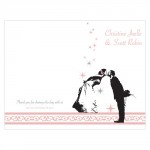
According to the Greeting Card Association, Americans exchange seven billion greeting cards every year. But what is the purpose of a greeting card? For many, greeting cards are used to convey sentiments they find hard to express. You can illicit or convey an emotion with the written words of a greeting card. And in order to sell stationery and greeting cards, you need a competitive edge to market them.
Let’s face facts. With cards and stationery, you are directly competing with box-stores. More bluntly, you are competing with cheap, generic greeting cards and stationery products. So how can you capture part of the massive greeting card market? The key is selecting cards and stationery products that are unique and speak to your customer base.
Finding Uniqueness Leads To Success
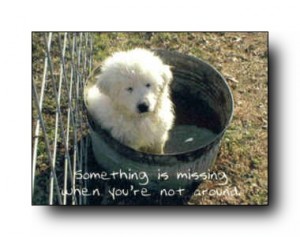 Uniqueness abounds in the greeting and stationery card world. The key is speaking your customers’ language. Do your customers love their pets? Pet oriented greeting cards speak to these customers. What dog lover can resist a greeting card with a Great Pyrenees dog on it?
Develop your greeting card strategy by thinking outside of your normal product mix box. Think more about the personalities of your customers when selecting your stationery products.
Do they enjoy humor? Find humorous greeting cards with a twist.
Are they sentimental? Find beautifully designed cards featuring soft, lyrical verses.
Does novelty peak their interest? Find cards with motion or sounds.
There is a greeting card for every personality. All you have to do is decide which personalities visit your store.
Thinking Outside The Box
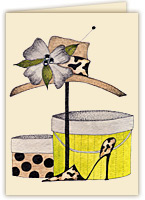 Statistically, women purchase the majority of stationery and gift cards, most of whom use fashion as a way to set themselves apart from the crowd. Add fashion elements to your greeting card selections and sales will soar. Why? Because women want personality.
Think about it. Greeting cards found at mass merchants are often impersonal. They leave one with a feeling of blandness. Adding fashionable greeting cards gives the purchaser a perception of merit.
When purchasers perceive greater value in a product, they develop a warm [Read more…]